iPHEX 2026 Insights: What’s Next for Pharma Engineering and GMP Facilities?
The pharmaceutical industry is changing, but the impact of these changes goes beyond new medicines and manufacturing technologies. As production processes become more advanced, pharmaceutical facilities also need to evolve.
That makes iPHEX 2026 relevant not just for manufacturers and suppliers, but also for professionals involved in Pharma Engineering, facility planning, utilities, cleanrooms, and project execution.
For companies planning a new manufacturing facility or upgrading an existing one, the important question is: How can current industry developments influence the way the next pharmaceutical facility is designed?
What iPHEX 2026 Could Mean for the Future of Pharma Facilities
As a major pharma exhibition in 2026, what you can expect at iPHEX is an opportunity to see how pharmaceutical manufacturing is evolving across products, processes, equipment, and supporting technologies.
For facility owners, however, the value lies in looking beyond individual technologies.
A new production system may require different utility capacities. More automation may change equipment layouts. New product categories may require additional controlled environments. Higher production volumes may require a more flexible facility.
In other words, manufacturing innovation eventually becomes an engineering and infrastructure requirement.
This is why pharmaceutical companies need to consider facility implications when evaluating new technologies and production strategies.
From Manufacturing Innovation to Facility Infrastructure
A pharmaceutical facility is a connected system. Changes in one area can affect several others.
For example, introducing new manufacturing equipment may influence:
- Electrical load requirements
- HVAC capacity
- Process utilities
- Equipment placement
- Material movement
- Personnel movement
- Maintenance access
- Production area requirements
This makes early Pharmaceutical facility planning particularly important.
Instead of designing a facility around today’s equipment alone, manufacturers can benefit from creating infrastructure that has enough flexibility to accommodate future changes.
5 Pharma Engineering Priorities Manufacturers Should Watch in 2026
The discussions around iPHEX 2026 can be viewed through a practical engineering lens. Several priorities are likely to influence pharmaceutical facility development in the coming years.
1. Designing Facilities Around Flexible Production
Pharmaceutical manufacturers may expand product portfolios, change production volumes, or introduce new processes over the life of a facility.
Rigid layouts can make these changes difficult.
Modern Pharma Engineering should therefore consider modular and adaptable spaces wherever practical. Production areas, utilities, laboratories, warehouses, and support spaces should be planned with future requirements in mind.
The objective isn’t simply to build a larger facility. It is to build one that can adapt without major disruption.
2. Building Smarter Utility Infrastructure
Utilities are often overlooked during early discussions about pharmaceutical manufacturing, yet they have a direct impact on facility performance.
Depending on the manufacturing process, facilities may require systems for:
- HVAC
- Purified water
- Water for Injection
- Compressed air
- Clean steam
- Electrical power
- Process gases
- Waste management
Effective Plant Engineering involves understanding production requirements first and then developing utility infrastructure around them.
Oversizing systems can increase capital and operating costs, while inadequate capacity can create operational problems. The right balance needs to be established during planning.
3. Strengthening Contamination Control and Cleanroom Planning
For pharmaceutical manufacturing, contamination control remains a fundamental facility consideration.
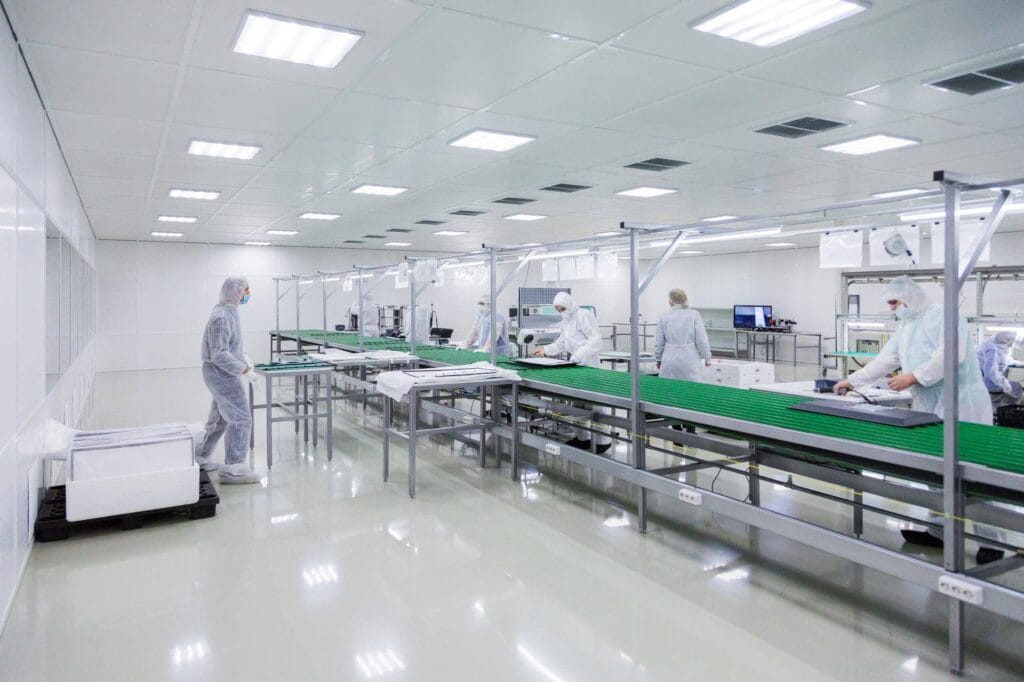
Cleanrooms should not be treated as isolated rooms within a larger building. Their design needs to work with the overall production layout, HVAC system, personnel movement, material flow, cleaning procedures, and operational requirements.
A Pharma Engineering Consultant can help coordinate these requirements during the design stage, ensuring that cleanroom planning fits into the broader facility strategy.
4. Integrating Automation Into Facility Design
Automation can improve process consistency and reduce manual intervention, but it also creates new infrastructure requirements.
Equipment layouts, electrical systems, data networks, control systems, maintenance access, and utility connections may all need to accommodate automated processes.
Planning these requirements early allows automation to become part of the facility rather than something added after construction.
This is particularly important for manufacturers looking to build facilities that can support increasing levels of digitalization over time.
5. Planning Facilities for Scalability and Expansion
A pharmaceutical facility should be designed with its expected lifecycle in mind.
Future expansion could involve additional production lines, new equipment, increased storage capacity, expanded laboratories, or additional utility requirements.
Collabtec’s Engineering Consultant can assess these possibilities during the initial planning stage and help identify where flexibility should be built into the facility.
A little planning today can prevent significant reconstruction tomorrow.
Why Pharmaceutical Facility Planning Needs to Start Earlier
One of the biggest mistakes in manufacturing projects is treating engineering as something that begins after the basic facility concept has already been finalized.
In reality, engineering decisions influence the entire project.
The location of production areas can affect material movement. Equipment selection can influence utility requirements. Cleanroom classification can affect HVAC design. Warehouse planning can affect logistics and building dimensions.
When these decisions are made independently, changes later in the project can lead to redesign, additional costs, and construction delays.
Early Pharmaceutical facility planning creates an opportunity to coordinate these requirements before they become difficult to change.
What Should Manufacturers Discuss With a Pharma Engineering Consultant?
Before starting a pharmaceutical facility project, manufacturers should have clear discussions with their engineering partner about:
- Current and projected production capacity
- Product and process requirements
- GMP expectations
- Cleanroom requirements
- Utility demand
- Equipment and technology integration
- Material and personnel flow
- Warehouse and laboratory requirements
- Future expansion
- Project timelines and execution strategy
The right Pharma Engineering Consultant should be able to connect these individual requirements into one practical facility plan.
This integrated approach is particularly valuable for companies developing a new plant, expanding an existing manufacturing facility, or upgrading infrastructure to support new production capabilities.
Turning iPHEX 2026 Insights Into Better GMP Facilities
The real value of an industry event such as iPHEX 2026 is not limited to what manufacturers see at the exhibition. The bigger opportunity is understanding how industry developments may affect their own operations.
For example, if a manufacturer plans to introduce more automated equipment, the facility should account for it. If production capacity is expected to increase, utilities and layouts should allow for expansion. If manufacturing processes require stricter environmental control, cleanroom and HVAC requirements should be considered from the beginning.
This is where industry knowledge needs to translate into practical engineering decisions.
A future-ready GMP facility is not simply a building equipped with modern machinery. It is an integrated environment where Plant Engineering, utilities, architecture, cleanrooms, production areas, and workflows are planned to work together.
Build a Future-Ready Pharma Facility With Collabtec
Turning pharmaceutical manufacturing requirements into a practical facility requires experience across multiple engineering disciplines.
Collabtec works as a Pharma Engineering Firm, supporting businesses with pharmaceutical facility planning, Plant Engineering, engineering coordination, and infrastructure development.
Its approach focuses on understanding the manufacturer’s processes and future requirements before translating them into facility and engineering solutions. This helps ensure that production areas, utilities, cleanrooms, laboratories, warehouses, and supporting infrastructure are planned as a coordinated system.
For companies evaluating the next phase of their pharmaceutical manufacturing operations, working with an experienced Pharma Engineering Consultant can help reduce design conflicts, improve project coordination, and create greater flexibility for future growth.
What Comes After iPHEX 2026?
The conversations and innovations highlighted at iPHEX 2026 can give pharmaceutical manufacturers a clearer picture of where the industry is heading. But the next step is turning those insights into decisions that work for a specific facility.
Whether the requirement is a new pharmaceutical plant, an expansion project, or modernization of an existing facility, engineering decisions made early can have a lasting impact on cost, compliance, efficiency, and scalability.
With thoughtful Pharmaceutical facility planning and the right engineering partner, manufacturers can build facilities that are prepared not only for today’s production requirements, but also for the changes that come next.
Meet Collabtec at the expo and let’s discuss your pharma facility requirements.
 7 to 9 September 2026
 Hall No. 6, Stall No. A3, Bharat Mandapam, New Delhi